
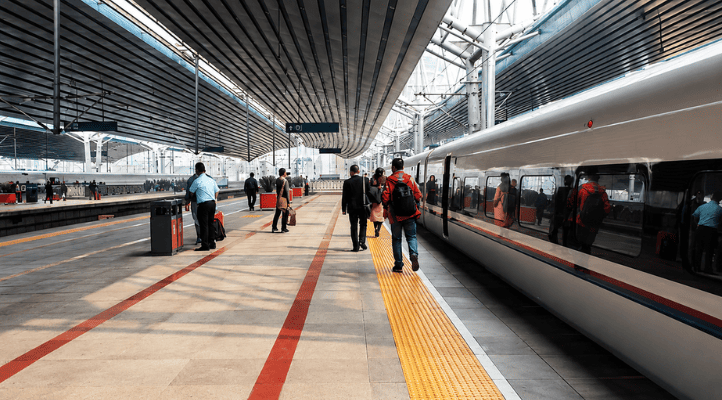
Modern transit hubs must do more than move people efficiently. They must feel safe, legible and welcoming at six in the morning and at eleven at night. For architects, planners and asset owners, the challenge is to strengthen security without turning public infrastructure into a hardened, fortress-like environment. The answer is not more visible security. It is better design.
From Reactive Security to Design-Led Prevention
Security in transport environments has historically been reactive: barriers, cameras and checkpoints added in response to incidents. Each addition solves one problem and often creates others, including congestion, visual clutter and a heightened sense of threat.
Across Australia, transit-oriented development is shifting towards design-led prevention. When Crime Prevention Through Environmental Design (CPTED) principles are embedded at concept stage, security becomes an inherent property of the place. Criminological research, including work published by the Australian Institute of Criminology, consistently finds that well-designed environments reduce both the opportunity for crime and the fear of crime. In a transit setting, that translates directly into passenger confidence and patronage.
Surveillance: Designing for Visibility
Surveillance is the most powerful CPTED principle in a high-volume transport environment, and its purpose is simple: ensure people can see and be seen.
- Open sightlines across platforms, concourses and interchanges that eliminate blind spots
- Consistent, high-quality lighting that removes shadow and supports visibility at all hours
- Active frontages, such as retail and food tenancies, that provide continuous passive surveillance
- Transparent materials, including glass balustrades and partitions, that maintain visual continuity
When visibility is prioritised, opportunistic and anti-social behaviour declines, and the space feels safer, which matters as much as being safer.
Access Control Without Friction
Access control in a transit hub must work at scale without interrupting flow. Design-led approaches include contactless fare gates with transparent, open design, clear separation of operational and back-of-house zones from public circulation, and the placement of any screening or checkpoint functions outside primary movement corridors. Wide, unobstructed circulation paths and the separation of arrival and departure flows do as much for security as they do for efficiency, because orderly movement makes disorder visible.
Territorial Reinforcement Without Fences
Territorial reinforcement defines how space is meant to be used without relying on overt restriction. In transit environments this is achieved through material transitions that signal movement between public, semi-public and operational zones, architectural landscaping such as seating walls and raised planters that can also serve as discreet hostile vehicle mitigation, and a consistent zoning language across the precinct so passengers always understand where they are and where they should be.
Space Management: The Signal That Someone Is in Charge
A well-kept station tells every user that the space is owned, watched and cared for. Prompt repair of damage, rapid removal of graffiti, active management of cleaning and maintenance, and the deliberate activation of underused corners all suppress the low-level disorder that, left unchecked, invites worse. Space Management is the least glamorous of the four CPTED principles and one of the most effective.
Wayfinding Is a Safety System
Confused passengers slow down, cluster and become vulnerable. Legible environments produce predictable movement through logical layouts that reduce unnecessary decision points, consistent signage across all transport modes, visual cues such as colour coding and architectural markers, and real-time information integrated into the built form. When movement is predictable, congestion falls, crowd stress reduces and unusual behaviour becomes easier to notice.
Multi-Modal Hubs Raise the Stakes
Hubs linking rail, bus, light rail, cycling and pedestrian networks multiply access points, user types and peak patterns. Without coordination, each interface becomes a seam where design intent and security outcomes fray. Clear zoning, a consistent design language and a single precinct-wide security strategy keep the whole environment coherent, so that safety does not fragment at the boundaries between modes.
How CPTED Australia Supports Transit Projects
CPTED Australia works with architects, planners and asset owners to deliver safer transport environments through design-led strategies. We provide CPTED and security risk assessments tailored to public transport settings, early-stage design advice that embeds security into planning and concept development, and evidence-based recommendations aligned with Australian standards and national guidance.
Connect with CPTED Australia to discuss how design-led security can support your transit hub or precinct.
About the Author
Simon Pollak is the Principal Consultant at CPTED Australia. He is a Fellow of the Australian Security Industry Association (FASIAL), a Certified Information Systems Security Professional (CISSP), holds a Master of Cyber Security, and is a licensed security consultant. His practice covers CPTED assessments, security risk assessments and security strategy for developments and venues across Australia.