
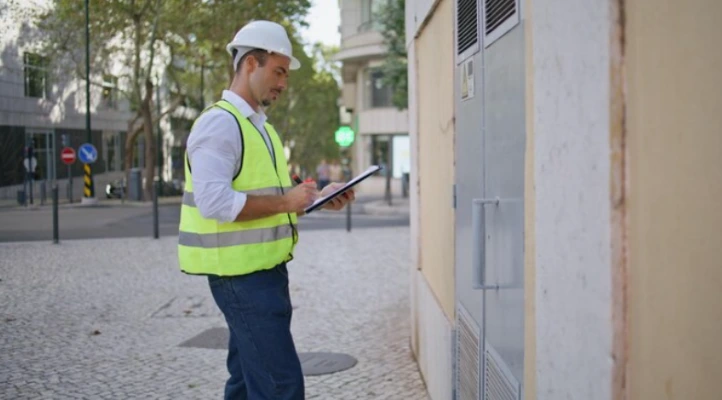
CPTED Australia prepares CPTED assessments for development applications, State Significant Development and crowded places projects across Australia. Each assessment examines the site’s context and proposed design against the four CPTED principles and provides recommendations that respond directly to the planning pathway the project is moving through.
What a CPTED Assessment Includes
A properly scoped assessment is built around the development in front of us, not a template. It generally includes a site walk and context review covering adjoining land uses, pedestrian movement, lighting and sightlines, an assessment of the proposed design against the CPTED principles, and specific, proportionate recommendations that a planner or certifier can check directly against the drawings.
When a CPTED Assessment is Required
Australian planning systems recognise crime prevention and safety as relevant design considerations, although the statutory mechanism and terminology differ between states and territories.
In practice, a CPTED assessment is most commonly required for a development application or State Significant Development in NSW, a planning permit application in Victoria, or an equivalent major project or development assessment process in other states and territories, and can also be requested by a council, consent authority or certifier at any stage of a project.
Meeting SEARs Requirements for State Significant Development in NSW
For State Significant Development in NSW, the requirement may originate in the Secretary’s Environmental Assessment Requirements. CPTED does not always appear as its own numbered issue.
The SEARs template for cultural, recreation and tourist facilities addresses it under the Public Space issue and lists a CPTED Report as required documentation, while the SEARs template for schools folds it into the Built Form and Urban Design issue as one of several design quality matters. Industry-specific SEARs also exist for hospitals, medical centres and health research facilities, and for warehouses and distribution centres, each with its own wording.
Where a SEARs references crime prevention, it is typically pointing to the Crime Prevention and the Assessment of Development Applications Guidelines, first published in 2001 to help councils identify crime risk and minimise opportunities for crime through the assessment of development proposals.
Separately, NSW Police guidance on Safer by Design encourages councils and local Police to identify the types of development that will typically require a crime risk assessment, and to prepare a consultation protocol for them. A response that only lists the four principles in the abstract, without applying them to the actual site, does not satisfy either source.
A site-specific approach to CPTED assessment for SSDAs can help reduce the risk of information gaps during the assessment process.
Assessments for Other State and Territory Planning Frameworks
Every Australian state and territory has published its own crime prevention or CPTED planning guidance, though the statutory weight and currency of these documents varies.
Victoria’s major projects are assessed through the Environment Effects Statement process under the Environment Effects Act 1978, administered by the Department of Transport and Planning, with urban design and safety considerations addressed separately through the Victorian Planning Provisions and local planning schemes.
Queensland Police publishes the Crime Prevention Through Environmental Design Guidelines for Queensland, updated in 2021, which local councils reference through their planning schemes rather than through a single statewide referral mechanism.
In Western Australia, the Western Australian Planning Commission’s Designing Out Crime Planning Guidelines date to 2006. In practice, CPTED is currently applied mainly through local planning policies, such as the City of Kwinana’s Local Planning Policy No. 8: Designing Out Crime, assessed on a case-by-case basis at council level.
Assessments to Support Conditions of Consent and Council Requirements
CPTED considerations can also surface outside the SEARs or major project process, including through a council’s Development Control Plan or as a condition of consent imposed after determination. A site-specific assessment prepared for one of these pathways needs to respond to the exact wording of the relevant requirement, not a general statement of CPTED principles.
What is Included in Your Assessment
- An assessment of the site’s physical layout, surrounding land uses, pedestrian movement, access arrangements and relevant environmental factors
- An assessment against the four CPTED principles
- An assessment scoped to the specific SEARs, DCP, condition of consent or other planning requirement that applies to the site
- Specific, proportionate recommendations referenced to the approved or proposed plans and relevant site conditions
- Documentation prepared to support a development application, EIS, response to a condition of consent or other relevant planning process
Get a CPTED Assessment for Your Development
CPTED Australia prepares CPTED assessments for developments across Australia, with each assessment scoped to the relevant planning pathway, site and requirement. Contact CPTED Australia or call (02) 9191 9771 to discuss your requirements and the assessment needed for your development.
About the Author
Simon Pollak is the Principal Consultant at CPTED Australia. He is a Fellow of the Australian Security Industry Association (FASIAL), a Certified Information Systems Security Professional (CISSP), holds a Master of Cyber Security, and is a licensed security consultant. His practice covers CPTED assessments, security risk assessments and security strategy for developments and venues across Australia.